
Lalo Salamanca: Genius, Monster, or Both?
You Shouldn’t Like Lalo Salamanca. You Will.
This piece accompanies Rewrite the Stars, my Better Call Saul fanwork centered on Lalo Salamanca. If you’d like to dive straight into the story, you can find it on Archive of Our Own: Rewrite the Stars
Lalo Salamanca is widely regarded as the most evil character in Better Call Saul. He is routinely described as a sociopath, a psychopath, a sadist—a man who enjoys torture and cruelty. That reading has become so dominant it is often repeated as fact rather than recognized as interpretation.
This story proceeds from a different reading. Not a romanticized one. Not a forgiving one. But one rooted in what the show actually shows—and what it does not. All any of us can do is interpret what we see. Even Lalo’s writers may not know him as intimately as the actor who brought him to life.
The only person who can truly answer who Lalo is—psychopath, sociopath, evil, or something more complicated—is Tony Dalton. 🖤
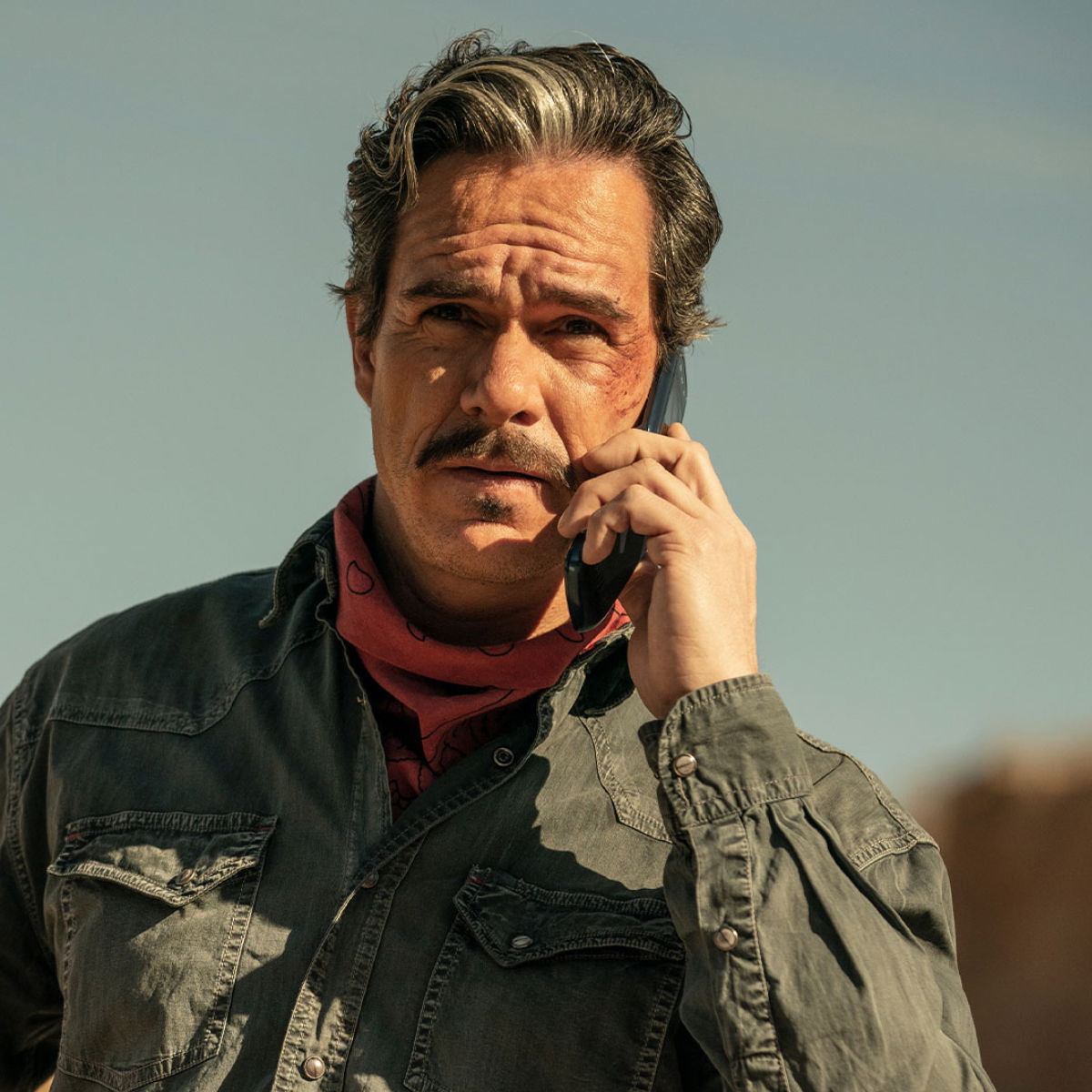
Lalo is a violent, ruthless murderer.
That is not in dispute. What is in dispute is the claim that he is uniquely monstrous within the moral universe of the show. Look closely and a pattern emerges. Lalo does not kill impulsively or emotionally. He kills when secrecy is compromised, when a witness becomes a liability, or when strategy demands it. He does not indulge cruelty for sport. He is repeatedly placed in situations where violence would be easy—even expected—and declines. He pets Margarethe Ziegler’s dog, calls it by name, and walks away, leaving both her and her dog unharmed—an outcome unlikely for many other antagonists in this universe. He shows warmth toward his staff. When they are murdered, he grieves. His sorrow is controlled; his rage is focused. That he does not collapse under grief does not mean he does not feel it.
That does not make him good. But it does make him specific.
Contrast this with others in the same world. Gus Fring approved the use of children in his drug operation and the execution of an eleven-year-old boy. He murdered a subordinate to assert dominance. He held Nacho’s father under implied threat of death and kept Hector alive in a state of disability for years for the explicit purpose of psychological torment, slowly erasing his family in front of him. Hector threatened a child to shorten Tuco’s sentence. Tuco, Marco, and Leonel kill impulsively, emotionally, and indiscriminately. Bolsa and Eladio held Gus down and forced him to look at Max's lifeless face.
These characters are described as tragic, brilliant, unstable.
Lalo is singled out as the monster.
Why?
Part of the answer lies in composure. Lalo is calm. Charming. Socially fluent. His violence is efficient and often silent. That quiet unsettles people. Lalo’s composure is frequently mistaken for a lack of humanity. He does not perform regret, nor does he indulge in excess. He simply does the work his world demands of him. Many who have lived inside institutional violence recognize this as a professional necessity. We know what it means to follow orders, to act decisively, and to suppress hesitation and sentimentality. Not because we are inhuman—but because freezing or faltering in the moment does not protect anyone. In those moments, there isn’t space to fall apart. You do the job first. You carry it afterward—or you don’t.
Another part of the answer lies in framing. When violence is aimed at enemies we have decided are beyond mercy, or death dismissed as collateral damage, we look away. We cheer when James Bond does it. When Lalo does it, we call it monstrous.
When our heroes leave devastation behind them, the camera rarely lingers. We are not given names. We are not shown families. Fred Whalen and Howard Hamlin had faces, histories, and grieving loved ones. But so did the embassy guards and civilians in Casino Royale.
Bond was justified, we tell ourselves. Lalo had reasons of his own. We simply did not approve of them.
Much of Clara Langford's backstory draws from my own life—not to shock, but to establish the lens through which this story is told. People who survive violence often learn to read it clearly—to know when someone is out of control and when they are deliberate; when cruelty is the point and when it isn’t; when harm is being named honestly and when it is being dressed up to sound better than it is.
In this story, love is not moral endorsement. It does not fix Lalo. It does not excuse him. It does not soften his world. The violence remains. The cost remains. What this story suggests—perhaps more unsettling than violence itself—is that love can exist without redemption. Someone can see another person clearly—without flinching, without idealizing, without attempting to fix—and choose love.
There is no scene in Better Call Saul that proves Lalo Salamanca is a psychopath or sociopath, nor clear evidence that he delights in suffering. Those labels are shortcuts—ways to disengage once a character becomes morally uncomfortable. This story begins from a refusal to do that. Not because Lalo deserves forgiveness, but because understanding is not the same as absolution.

For all its heavy philosophical framing, Rewrite the Stars is a fun thriller romance meant to entertain, engross, and pull you all the way in.
You can read the story here: Rewrite the Stars on Archive of Our Own
Desert highways at midnight. Terrible road-trip sing-alongs. Sass and laughs. Tequila and Modelo under the stars. Mike Ehrmantraut doing what Mike Ehrmantraut does best. Gus and Lalo playing chess with each other’s lives. Kidnappings. Helicopter search-and-rescue. Clandestine recon.
And at the center of it all—
A love story that does not ask to be forgiven.
🧡
© Copyright 2026 Rian C. Stone. All rights reserved.